
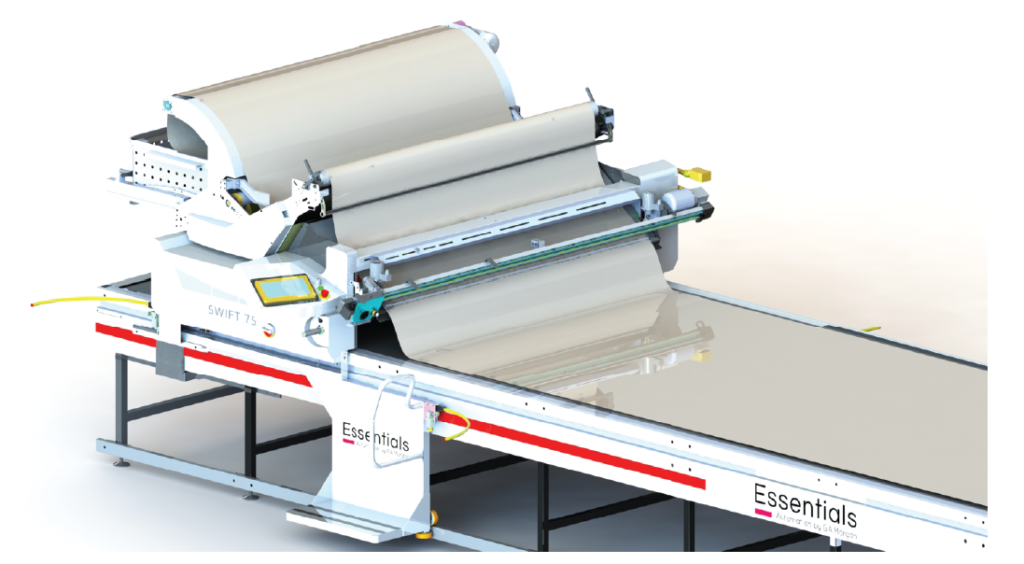
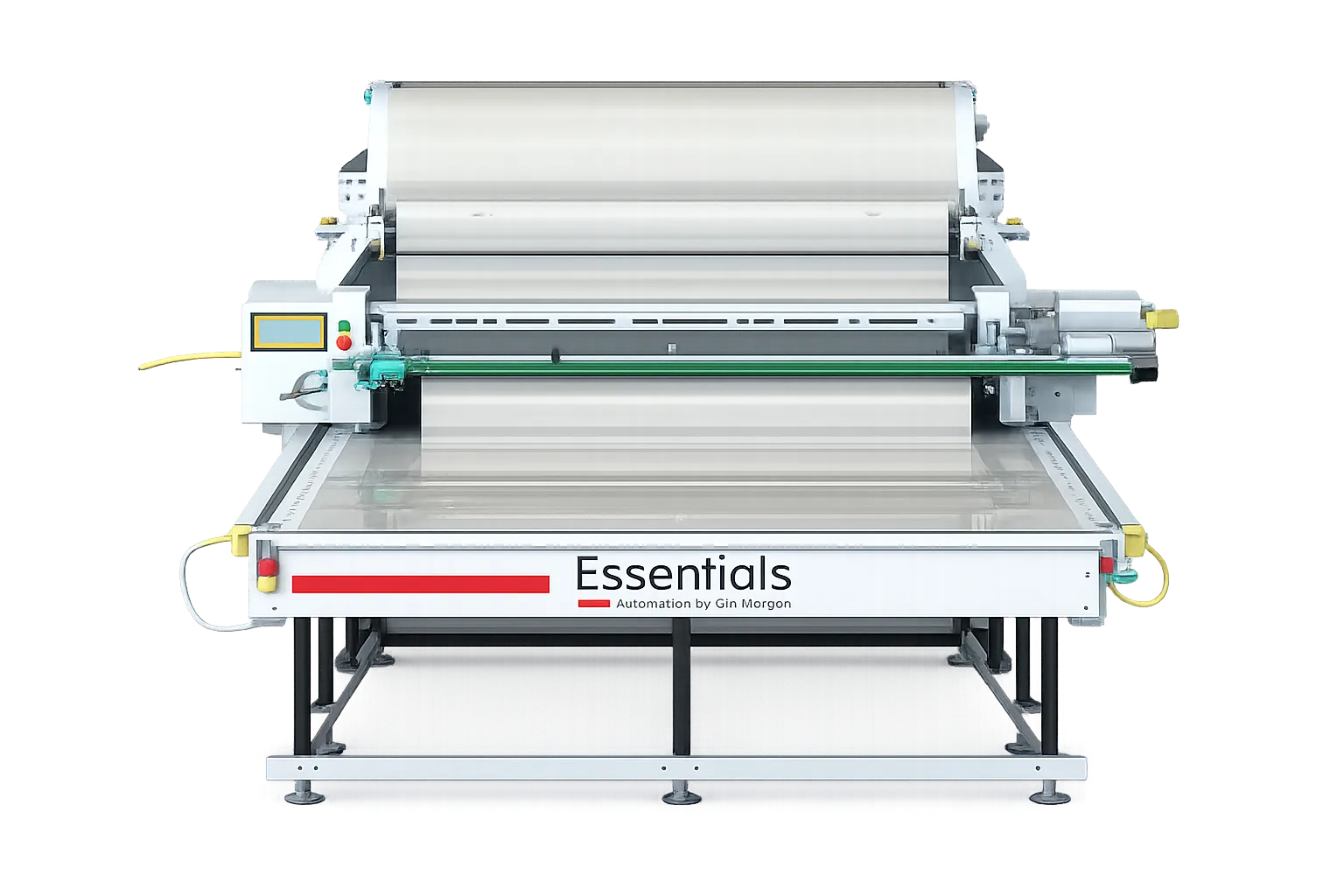
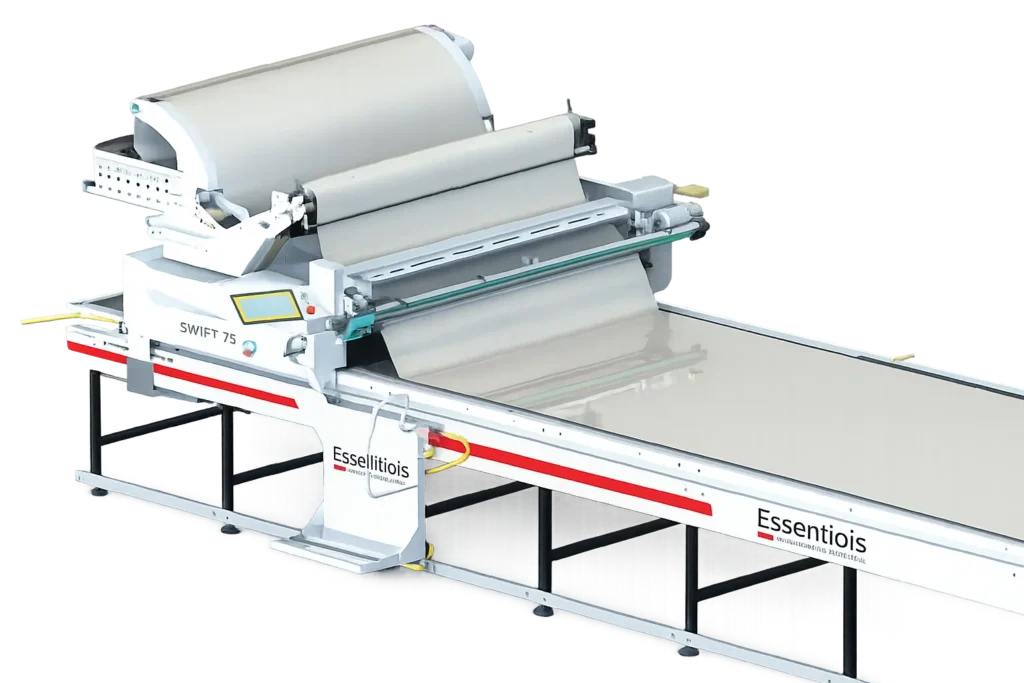
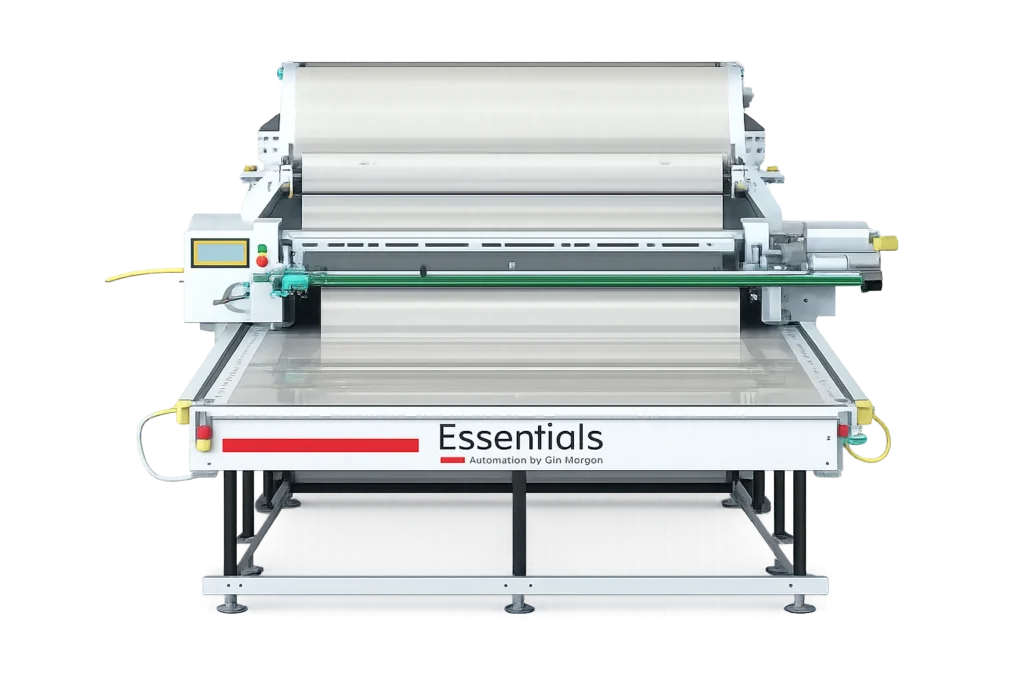
SWIFT 75
Programmable Automatic Fabric Spreading Machine — 180 / 220 cm | Essentials by GA Morgan
A high-performance, programmable automatic spreading machine designed for all fabric types — from flat wovens to delicate spandex. SWIFT 75 delivers tension-free, precise, high-speed spreading with full CAD/CAM integration and real-time production data for modern cutting rooms. Designed in Italy and assembled in India by GA Morgan
SWIFT 75
Programmable Automatic Fabric Spreading Machine — 180 / 220 cm | Essentials by GA Morgan
Smart Manufacturing Capabilities
Viz Cloth is designed for the modern, data-driven apparel factory:
- ✓ Sustainability
- ✓ Traceability
- ✓ Real-Time Data (IoT)
- ✓ Accountability (User Control)
Sustainability
Precision spreading reduces material waste from uneven lays; programmable step-lay minimises end-waste
Traceability
Automatic length measurement and splice mark detection create a digital lay record for every spread
Real-Time Data (IoT)
CAD/CAM and Mastermind integration enables live spreading data (fabric usage, overlap values and operator efficiency) to flow into production planning systems
Accountability
Operator login and access control with per-shift spreading performance tracking
What Is SWIFT 75?
SWIFT 75 is the automatic spreading machine is Designed in Italy and manufactured/assembled by GA Morgan India for Fusion Spreading Line — It delivers programmable, tension-free spreading for all fabric types including flat-folded, roll, tubular, and relaxed fabrics in widths of 180 cm and 220 cm. Built for small to large cutting rooms, SWIFT 75 integrates directly with CAD systems (Cutplan, Mastermind) and accepts data via in-built Windows Touch PC — enabling programmable automatic spreading with no manual setup
Key Features
Programmable Automatic Spreading
SWIFT 75 accepts spreading programmes directly from CAD/cut plan systems, enabling fully automated spreading with pre-defined lay length, number of plies, step-lay positions, and end-of-lay actions — reducing operator intervention to a minimum.
Tension-Free Spreading for All Fabric Types
A specially engineered tension-free spreading system ensures fabric is laid without stretch or distortion — critical for Spandex, jersey, modal, and other stretch fabrics that distort under conventional spreading tension.
Programmable Dancer Bar — Tension Control
The dancer bar system automatically compensates for varying roll weights and fabric densities, maintaining consistent tension-free feeding throughout the lay — from the first ply to the last.
Face-Up, Face-Down, Zig-Zag, and Step-Lay Modes
SWIFT 75 supports all standard spreading modes: face-up, face-down, zig-zag, zig-zag with both-end cut, and step-lay — covering every cutting room requirement in a single machine.
CAD/CAM Integration
Direct integration with GA Morgan's Mastermind cut planning software, Morgan Tecnica CAD, and third-party systems via in-built data import. Spreading data, lay length, and marker file information flows
seamlessly from planning to the spreading floor.
Automatic Splice Mark Detection
The system detects fabric splices during spreading and alerts the operator — preventing lay defects caused by fabric joins and ensuring splice marks are correctly handled at every ply.
Auto Diagonal System
Automatic diagonal correction ensures the fabric edge is perfectly aligned at every ply — reducing selvedge waste and ensuring the marker fits within the lay width accurately.
Electronic Fabric Usage Report
SWIFT 75 automatically generates fabric usage reports per spread — capturing lay length, ply count, fabric consumed, and efficiency metrics for integration into production management systems.
Industrial Windows Touch PC
The built-in industrial Windows Touch PC enables data input from CAD/cut plan systems, programme management, and operator interface — with a simplified interface for fast, error-free spreading setup.
Operator Login & Access Control
Operator-level login ensures spreading programmes are executed only by authorised personnel and every spread is logged with operator ID, time, and performance data.
Business Benefits
- Tension-free spreading eliminates stretch-related mis-cuts and fabric distortion
- Programmable automation reduces operator skill dependency and setup time between lays
- Zig-zag and step-lay modes minimise end-of-lay fabric waste
- CAD/CAM integration eliminates manual data entry from planning to spreading
- Splice mark detection prevents lay defects and cut quality issues
- Automatic fabric usage reports support real-time production monitoring
- High-speed spreading — up to 75 m/min — improves cutting room throughput
- Suitable for 14 different parameter profiles — maximum flexibility across styles
Applications
- Garment and apparel factories — knitwear, wovens, and stretch fabrics
- Export houses and large-scale cutting rooms requiring programmable automation
- Spandex, modal, jersey, and technical fabric cutting operations
- Home furnishing and upholstery fabric spreading
- Uniform and workwear manufacturers with high-volume, consistent lay requirements
Technical & Hardware Specifications
| Product Name | SWIFT 75 |
|---|---|
| Model Codes | ES-203-10-180-75 | ES-203-10-220-75 |
| Available Widths | 180 cm | 220 cm |
| Max Spreading Speed | 75-100m/min |
| Spreading Modes | Face-Up, Face-Down, Zig-Zag, Zig-Zag Both Ends Cut, Step- Lay |
| Fabric Types | Flat-Folded, Roll, Tubular, Relaxed |
| Voltage | 440V, 3 Phase, 50 Hz |
| CAD Integration | Mastermind, Cutplan, GA Morgan CAD, third-party via data import |
| Controller | Industrial Windows Touch PC |
| Profiles | Up to 14 programmable parameter profiles |
| Made In | India |
Ready to Automate Your Spreading Room?
SWIFT 75 brings precision, programmable automation to your spreading operation — reducing waste,
improving throughput, and integrating seamlessly with your CAD and cut planning systems.
Frequently Asked Questions
SWIFT 75 integrates with GA Morgan Mastermind, Cutplan, and most major third-party CAD systems via standard data import. Contact GA Morgan for compatibility confirmation with your specific system.
Yes. SWIFT 75 is designed to handle flat-folded, roll, tubular, and relaxed fabric formats — making it suitable for knitwear and tubular jersey cutting rooms.
SWIFT 75 supports face-up, face-down, zig-zag, zig-zag with both-end cut, and step-lay — covering all standard cutting room spreading requirements.
Yes. SWIFT 75 automatically generates fabric usage reports per spread, including lay length, ply count, fabric consumed, and efficiency data — suitable for integration into your production management system.
Yes. It improved carbon footprint by saving energy, paper as per ESG Norms and it is a green initiative.